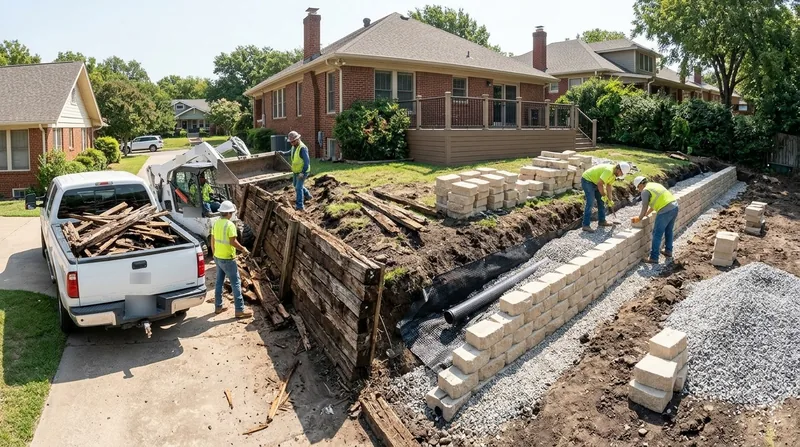




Retaining Wall Replacement in Fort Worth is a critical investment for homeowners whose timber, railroad tie, or aging concrete walls have rotted, buckled, or failed under the pressure of Fort Worth's black expansive clay. Our yards sit on terrain that ranges from flat to steeply ravined along the Clear Fork and West Fork, with walls bearing constant stress from clay that swells after spring thunderstorms and shrinks in summer drought. Whether your 1970s landscape timber bed has collapsed into Tanglewood, your driveway wall in Mistletoe Heights is leaning toward the street, or your creek-side retaining wall in Benbrook is showing signs of washout, we remove the failed structure completely, haul away debris, install proper drainage, and build a new wall engineered for Fort Worth's climate and soil conditions. Fort Worth Retaining Wall brings field expertise and local knowledge to every replacement, ensuring your new wall stands for decades without the premature failure that plagued the original.
Why Retaining Wall Replacement Matters in Fort Worth: Clay, Drainage, and Structural Failure
Fort Worth's signature black clay is the root cause of most retaining wall failures. This soil shrinks dramatically during dry spells and expands violently after heavy rain, creating lateral pressure that no timber or single-wythe concrete wall can resist for long. Add to that the flash runoff that occurs in creek-side yards after thunderstorms, inadequate or failed drainage behind the wall, and the relentless Texas sun beating down on landscape timber, and you get a wall that deteriorates from both sides. A failed retaining wall is not just an eyesore; it's a liability, a hazard to foot traffic, and a sign that soil erosion and foundation risk are accelerating on your property. Replacement is the only permanent solution once the wall has rotted, cracked, or lost structural integrity.
- We remove the entire failed structure, including all rotted timber and compromised concrete, down to the footing.
- We excavate and inspect the soil behind the wall to identify clay type, drainage failures, and subsurface water movement.
- We install a new wall with proper drainage systems (perforated pipe, gravel backfill, and weep holes) to relieve hydrostatic pressure and prevent future failure.
- We choose materials suited to Fort Worth's climate: segmental block, engineered concrete, or natural stone that resist the stress Fort Worth clay exerts.
- We obtain all required permits and comply with local setback and property-line rules before construction begins.
Replacement gives you a new wall built to last, with drainage engineered for Fort Worth's seasonal extremes and soil type.
Key info: Fort Worth's 1950s-60s brick ranches in Tanglewood and Ridglea often sit on lots with landscape timber retaining walls that are now 50+ years old. Timber absorbs water, rots from the base up, and loses load capacity silently until it fails. When you see a sagging timber wall, replacement is already overdue. Check the Fort Worth Building Standards online for height and setback requirements before planning your project.
For more on the relationship between drainage and wall longevity, see our guide to Retaining Wall Drainage.
How We Replace a Retaining Wall in Fort Worth: Process and Timeline
Our replacement process starts with a site visit to assess the failed wall, measure it, evaluate the soil and drainage situation, and identify any utility lines or property-line constraints. We provide a detailed estimate that covers demolition, haul-away, new drainage, materials, and labor. Once you approve, we schedule the work and move crews in to execute the job methodically, with minimal disruption to your yard and neighbors. Most replacements take 3 to 7 days depending on wall length, height, material choice, and site access, though complex tiered walls or those requiring engineered drawings may take longer.
- We mark the work area, set up equipment staging, and notify utility locating services to flag any underground lines.
- We demolish the old wall in sections, carefully removing all concrete, timber, and debris to minimize noise and dust.
- We excavate the footing trench to proper depth (below frost line and on stable soil), install perforated drainage pipe and gravel backfill behind the new wall location.
- We build the new wall using your chosen material (block, concrete, stone, or timber), ensuring it is plumb, level, and properly backfilled with engineered drainage.
- We install weep holes or drainage outlets to allow water behind the wall to escape before pressure builds.
- We compact and grade the area, restore landscaping where needed, and perform final site cleanup.
Each step is designed to prevent the drainage failures and soil pressures that destroyed the original wall.
Local example: A Rivercrest homeowner had a 4-foot limestone retaining wall built in the 1960s that was leaning 3 inches out of plumb and cracking at the top. We removed it, found that clay had washed away from behind the wall during creek flooding, and rebuilt it with segmental block on a deeper footing and perforated drainage pipe. The new wall is plumb, properly drained, and rated for 20-year service life in Fort Worth's climate.
For information on material options, visit our pages on Concrete Retaining Walls or Block and Segmental Retaining Walls.
Retaining Wall Replacement Methods and Material Options for Fort Worth
The best material for your replacement depends on your budget, aesthetic preference, the height and length of the wall, soil conditions, and whether the wall needs to be engineered. Fort Worth's clay and seasonal weather favor materials that resist hydrostatic pressure and don't absorb water. Below is a comparison of the most common approaches.
| Approach | Description | Best for |
|---|---|---|
| Segmental Block (SRW) | Interlocking concrete or composite blocks stacked and backfilled with drainage. No mortar. Flexible and forgiving under clay movement. | Most Fort Worth residential replacements. 3-8 feet tall. Good appearance, moderate cost, proven performance in clay soil. |
| Poured Concrete | Monolithic concrete wall, often reinforced with rebar. Requires formwork and curing time. Rigid and strong. | Tall walls (6-12 feet), high-load situations, or driveway support. Premium cost. Excellent longevity if drainage is installed. |
| Natural Stone or Boulder | Stacked limestone, granite, or large boulders, often with mortar or dry-laid. High visual appeal. Durable but labor-intensive. | Visible walls in upscale neighborhoods (Mistletoe Heights, Rivercrest). Premium aesthetic. Higher cost per square foot. |
| Pressure-Treated Timber or Composite | Modern treated lumber or composite materials rated for ground contact. Better rot resistance than old landscape timber. Still absorbs moisture over time. | Informal, rustic aesthetic. Lower initial cost. Not recommended for tall walls or high-load situations in Fort Worth clay. |
Each material requires proper drainage design and footing depth to succeed in Fort Worth. We recommend a site visit to discuss which option suits your wall height, soil conditions, and budget.
Retaining Wall Replacement Cost in Fort Worth: What to Expect
Most residential retaining wall replacements in Fort Worth start at $35 per square foot for basic segmental block walls with standard drainage. A 30-foot-long, 4-foot-tall block wall typically runs $4,200 to $5,400 installed. Costs rise with wall height, material choice (stone and poured concrete cost more), difficult site access, poor soil conditions requiring deeper footings, and the need for engineered drawings or permits. Tall walls (over 4 feet), tiered systems, or walls supporting a surcharge like a driveway or structure often require a structural engineer's design, which adds $500 to $2,000 to the project cost but ensures the wall is safe and code-compliant. Getting 2 to 3 estimates from licensed contractors is the best way to understand the range for your specific situation.
For a detailed breakdown of pricing by wall type and material, visit our pricing page. Factors that most often move the cost upward include:
- Wall height over 4 feet, which may require engineered design and stricter permitting in Fort Worth.
- Poor site access (narrow gates, steep terrain, or dense landscaping that slows equipment and labor).
- Soil conditions requiring deeper or wider footings to reach stable bearing.
- Material choice: natural stone and poured concrete cost 50-100% more than segmental block.
- Tiered or terraced walls, which require more excavation, drainage, and labor.
- Proximity to structures, utilities, or property lines, which constrains equipment placement and slows work.
The best way to get an accurate number is to call us for a free estimate. We inspect your wall, measure it, assess the soil and drainage, and provide a detailed quote with no obligation to book.
Retaining Wall Replacement Near Me: What Fort Worth Homeowners Should Know When Hiring a Contractor
Choosing the right contractor for retaining wall replacement is critical because a poorly built wall will fail again, potentially causing property damage or injury. Ask for references from recent Fort Worth projects and contact at least two to ask about the contractor's communication, timeliness, cleanup, and whether the wall has held up well. Verify that the contractor understands Fort Worth's local permitting requirements, especially for walls over 4 feet or those supporting a surcharge; many jurisdictions require a permit and possibly engineered drawings, and a good contractor will handle this proactively. If your property is in an HOA, check your covenants for restrictions on wall materials, colors, or setbacks before the contractor starts work.
- Confirm the contractor is licensed and insured and willing to provide current certificates of insurance.
- Request at least three references from Fort Worth-area jobs completed in the last two years.
- Ask whether the contractor will obtain the permit or if you are responsible for filing with your local building department.
- Verify that the contractor's estimate includes demolition, haul-away, new drainage, materials, labor, and site restoration.
- Discuss the project timeline, payment schedule, and what happens if the job takes longer than estimated.
- Review the warranty or guarantee offered on the new wall, materials, and workmanship.
A qualified contractor will answer these questions clearly and provide a written estimate that itemizes each phase of the work. If you are ready to move forward, contact Fort Worth Retaining Wall for a free, no-obligation estimate.
Retaining Wall Replacement in Fort Worth: Pricing Guide
| Service | Price | Details |
|---|---|---|
| Segmental Block Retaining Wall Replacement | Starting at $35/sq ft | Most common Fort Worth option. Includes demolition, footing, block, drainage, backfill, and labor. Cost rises with wall height above 4 feet or difficult site access. |
| Poured Concrete Retaining Wall Replacement | Starting at $50/sq ft | Engineered concrete wall with rebar. Suitable for tall walls or driveway support. Includes formwork, concrete, drainage, and finishing. Premium cost justified by durability. |
| Natural Stone or Boulder Wall Replacement | Starting at $60/sq ft | Stacked limestone or granite for high-end aesthetic. Labor-intensive. Best for visible walls in Mistletoe Heights, Rivercrest, or similar upscale neighborhoods. |
| Tiered or Terraced Wall System | On estimate | Multiple walls stacked with setbacks and drainage between tiers. Requires engineered design and significantly more labor. Site visit and custom quote required. |
| Permit, Engineering, and Design Coordination | Included for walls under 4 feet; additional $500-$2,000 for engineered drawings | We handle all Fort Worth permit filings and coordinate with local building department. Tall walls or complex sites may require professional engineer design. |
| Free Estimate and Site Inspection | Free | Response within 24 hours at (817) 764-1304. We measure, assess soil and drainage, discuss material options, and provide a detailed written quote with no obligation to book. |
Indicative pricing, the exact cost depends on square footage, finish, and site access. Free personalized estimate within 24h at (817) 764-1304.


