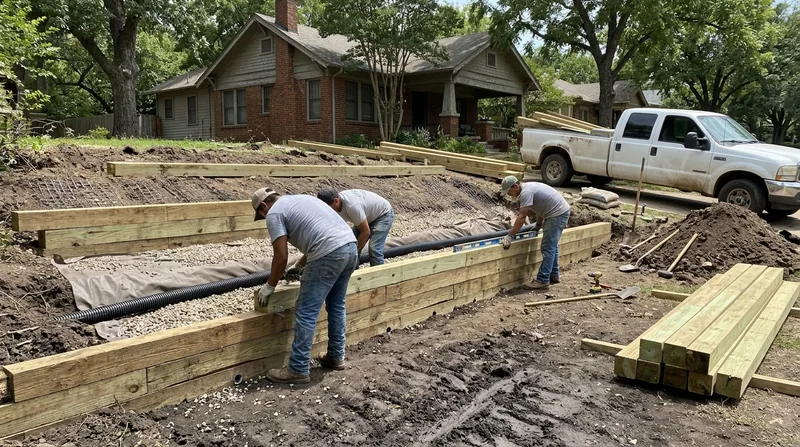




Timber retaining walls in Fort Worth offer a cost-effective way to terrace garden beds, manage gentle slopes, and define landscape zones across the city's diverse neighborhoods. From the brick Tudors perched on Mistletoe Heights bluffs to the 1950s ranches spreading across Tanglewood and Wedgwood, Fort Worth homeowners often inherit or need to build low retaining structures on properties that break into creek ravines, limestone shelves, and black expansive clay that shifts dramatically with Texas drought and spring storms. Pressure-treated timber walls work well for modest grades and decorative terracing, but the harsh Fort Worth sun, clay movement, and flash runoff demand honest conversation about when timber makes sense and when a longer-lasting material like block, concrete, or natural stone is the smarter investment. We install, repair, and replace timber walls with a clear eye toward realistic lifespan, proper drainage, and the specific soil and climate challenges that dominate this region. Call us at (817) 764-1304 for a free estimate, or read on to understand how timber walls perform in Fort Worth and what to expect when you build one.
Why Timber Retaining Walls Matter in Fort Worth's Shifting Landscape
Fort Worth sits on black expansive clay that shrinks in summer drought and swells after spring thunderstorms, making retaining walls essential for preventing erosion and stabilizing yards that slope toward creek ravines and limestone bluffs. Timber walls have been a fixture here since the 1970s and 80s, when landscape timber and railroad tie beds became standard in residential landscaping across the city. They remain popular because they are affordable to install, blend naturally with garden design, and can be replaced or refreshed without the cost of concrete or segmental block. However, timber has a finite lifespan in Fort Worth's climate, and understanding that reality upfront helps you plan maintenance and eventual replacement. We guide homeowners through the honest trade-offs so you choose the right material for your specific lot and budget.
- Timber walls cost less upfront than concrete, block, or stone alternatives, making them ideal for budget-conscious garden terraces and low retaining applications.
- Pressure-treated lumber resists rot and insect damage longer than untreated wood, but still deteriorates faster than engineered or masonry materials in Fort Worth's heat and humidity cycles.
- Timber walls work best on gentle slopes under 4 feet in height and in areas without heavy surcharge (driveway or structure loading) that would demand engineered design.
- Proper drainage behind a timber wall is critical in Fort Worth clay; without it, hydrostatic pressure will bow and fail the wall within a few years of heavy spring rains.
- We build timber walls with landscape fabric, gravel backfill, and perforated drain pipe to manage the water that clay soil cannot absorb, extending wall life and preventing the catastrophic failures common in this region.
Timber retaining walls make sense when you need an affordable, attractive solution for a garden bed or modest slope, but only if you understand that they require maintenance and will eventually need replacement.
Key info: Fort Worth's black clay expands and contracts with seasonal moisture, pushing and pulling on retaining walls. Homeowners in Fairmount, Ryan Place, Mistletoe Heights, and neighborhoods along the Clear Fork and West Fork see the most dramatic wall failures during spring after heavy rains and again in late summer drought. Timber walls without proper drainage fail fastest in these cycles.
For more details on how drainage protects your investment, see our retaining wall drainage page. If you have an existing timber wall that is leaning, bowing, or pulling away from the slope, we also handle leaning and collapsed wall repair across Fort Worth and the surrounding areas.
How We Build Timber Retaining Walls in Fort Worth: Step-by-Step Process
Building a timber retaining wall correctly in Fort Worth means accounting for clay movement, flash runoff, and the hard Texas sun that ages wood faster than in cooler climates. We start with a site visit to assess slope angle, soil type, drainage patterns, and any utility lines or property-line setbacks that apply in your neighborhood. Once we confirm the scope, we excavate a level footing, set pressure-treated posts or timbers in concrete, backfill with gravel and landscape fabric, and install perforated drain pipe to channel water away from the wall. This approach prevents the hydrostatic pressure that causes failure on Fort Worth properties, especially those in creek-side yards or areas with poor natural drainage.
- We inspect the site and measure the slope to determine wall height, post spacing, and whether the project requires a permit from the local building department.
- We excavate a stable footing below the frost line and compact the base to prevent settling, which is critical on Fort Worth's expansive clay.
- We set pressure-treated timbers or posts in concrete footings, securing them with rebar and lag bolts to resist the lateral pressure from backfill and groundwater.
- We line the back of the wall with landscape fabric, then backfill with gravel and install perforated drain pipe at the base to manage subsurface water flow.
- We grade the top of the wall level and compact the backfill to prevent future settling, then verify drainage is working before we finish the job.
This method ensures your timber wall resists the clay movement and water pressure that cause premature failure in the Fort Worth area.
Local example: A homeowner in Wedgwood needed a 3-foot timber wall to terrace a sloping garden bed that faced north toward a small creek drainage. We excavated a footing below the clay layer, set pressure-treated 6x6 posts in concrete, backfilled with gravel and drain pipe, and installed landscape fabric to prevent clay from migrating into the drainage zone. Three years later, the wall remains level and dry, with no bow or lean, because proper drainage kept hydrostatic pressure from building up behind it.
See our retaining wall installation page for details on our full process across all material types, or call (817) 764-1304 to schedule a free estimate.
Timber Retaining Wall Methods and Materials
| Approach | Description | Best for |
|---|---|---|
| Pressure-Treated Timber Posts | 6x6 or 8x8 posts set in concrete footings, connected with horizontal timbers or lag bolts, backfilled with gravel and drain pipe. | Low to medium retaining walls (2-4 feet) in gardens, terraces, and landscape beds where aesthetic appeal and cost matter more than extreme durability. |
| Landscape Timber Stacking | Pressure-treated 4x6 or 4x8 timbers stacked horizontally, pinned with rebar, creating a modular wall that can be adjusted or rebuilt over time. | Small garden beds, raised planting areas, and decorative terraces where the wall will not bear heavy surcharge or resist significant soil pressure. |
| Railroad Tie Replacement | Removal of deteriorated railroad tie walls and replacement with pressure-treated timber posts or block, depending on site conditions and homeowner preference. | Fort Worth properties with 1970s-80s landscape timber or railroad tie beds that have rotted, cracked, or begun to lean after decades of clay movement and weather exposure. |
| Hybrid Timber and Drainage | Timber wall with engineered drainage, including perforated drain pipe, gravel backfill, and landscape fabric, designed to handle Fort Worth's expansive clay and spring runoff. | Any timber wall in Fort Worth where hydrostatic pressure, clay movement, or creek-side drainage is a concern; this is the standard we recommend for maximum lifespan. |
Timber Retaining Walls Cost in Fort Worth: What to Expect
Timber retaining wall costs in Fort Worth typically start at $20 per square foot for straightforward installations on stable ground with good access. The final price depends on wall height, soil type, drainage requirements, and whether the project needs a permit or engineered design. A 3-foot wall running 20 feet in length (60 square feet) might cost $1,200 to $1,800 before permits or site preparation, while a taller or more complex wall with extensive drainage work will run higher. Getting multiple estimates is smart because site conditions vary dramatically across Fort Worth's neighborhoods, especially between the flat Tanglewood properties and the bluff-side lots in Mistletoe Heights or along the Trinity River.
Factors that move the price up include timber size (6x6 posts cost more than 4x6 timbers), wall height above 4 feet (which triggers permit requirements and may demand engineered drawings), poor soil or high water tables that require extra drainage infrastructure, and difficult access that slows installation. See our pricing page for a detailed breakdown of material and labor costs, or call (817) 764-1304 for a free estimate tailored to your specific lot and slope.
Timber Retaining Walls Near Me: What Fort Worth Homeowners Should Know When Hiring a Contractor
Choosing the right contractor for your timber retaining wall in Fort Worth starts with confirming they are licensed and insured, understand local permit requirements, and have hands-on experience with Fort Worth's clay and drainage challenges. Many homeowners assume any contractor can build a timber wall, but poor drainage design and inadequate footing depth are the leading causes of early failure in this region. Before you hire, ask for references from recent Fort Worth projects, request a written estimate that breaks down materials and labor, and verify that the contractor will pull any required permits and coordinate with your local building department. If your property has an HOA, check whether deed restrictions apply to retaining walls or material choices; some neighborhoods in Keller, Southlake, and Grapevine have strict architectural guidelines.
- Ask whether the estimate includes drainage design, perforated pipe installation, and gravel backfill, since these are non-negotiable in Fort Worth clay.
- Request at least two references from recent Fort Worth retaining wall jobs and call them to ask about drainage performance and whether the wall has remained level and dry.
- Verify that the contractor will handle all permit applications and inspections if your wall exceeds 4 feet or supports a driveway or structure surcharge.
- Check with your HOA or property deed if you live in a restricted neighborhood; some communities require approval before any retaining wall work begins.
Contact us for a free estimate or call (817) 764-1304 to discuss your project and get answers to any questions about permits, materials, or timeline.
Timber Retaining Walls in Fort Worth: Pricing Guide
| Service | Price | Details |
|---|---|---|
| Basic Timber Wall (3-4 feet, good access) | Starting at $20/sq ft | Pressure-treated timber posts, concrete footings, gravel backfill, landscape fabric, and perforated drain pipe included at this base rate |
| Tall or Complex Timber Wall (4+ feet, poor access, clay management) | Starting at $25-30/sq ft | Engineered design, deeper footings, expanded drainage, multiple soil stabilization measures, and permit coordination drive cost increase on difficult Fort Worth sites |
| Railroad Tie Wall Removal and Replacement | Starting at $22/sq ft | Demolition, haul-away, new pressure-treated timber posts, concrete footings, gravel, and drainage installation for 1970s-80s landscape timber bed replacement |
| Large-Scale or Terraced Installation | On estimate | Multi-tier walls, significant slope regrading, extensive drainage infrastructure, or multiple walls require site visit and custom engineering before pricing |
| Travel and Mobilization | Included | No separate mileage fee or call-out charge within Fort Worth and surrounding service areas including Weatherford, Burleson, Mansfield, Keller, and Southlake |
| Free Estimate | Free | On-site consultation, slope measurement, soil assessment, and written proposal with no obligation to book; response within 24 hours at (817) 764-1304 |
Indicative pricing, the exact cost depends on square footage, finish, and site access. Free personalized estimate within 24h at (817) 764-1304.


