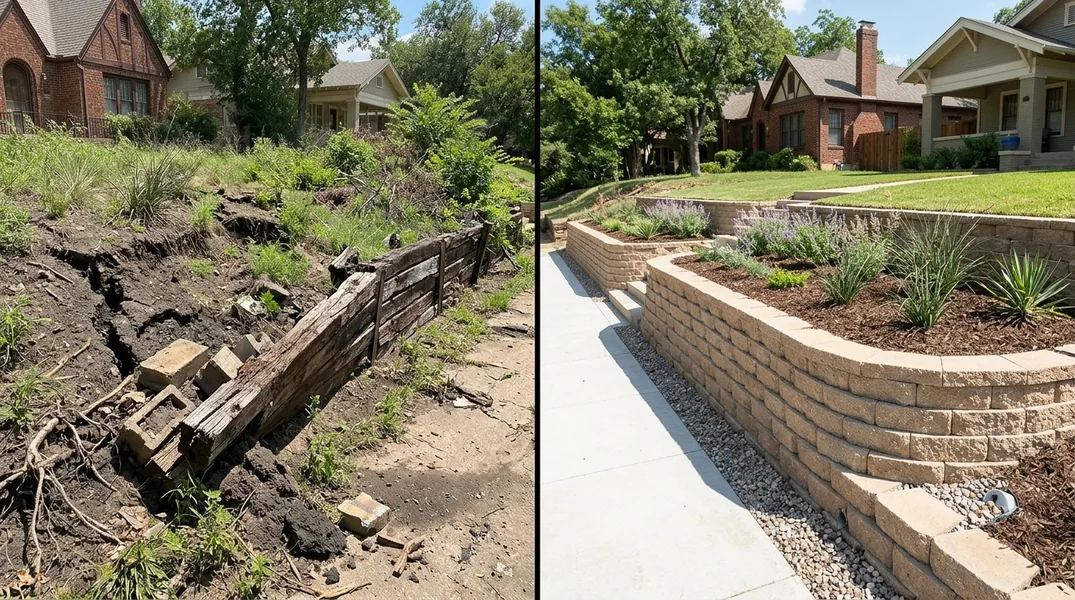
Understanding Fort Worth Soil Challenges and Retaining Wall Needs
Fort Worth sits in a region known for challenging soil conditions, particularly expansive clay that shifts with moisture changes. This natural characteristic makes selecting the right retaining wall material critical for long-term stability and durability. Homeowners in the area also contend with limestone bedrock, which influences both installation difficulty and material choice. Understanding these geological factors will help you make an informed decision when planning Retaining Wall Installation on your property.
Expansive clay soils expand when wet and contract when dry, creating movement that can stress retaining structures. Limestone, while stable, presents drilling and excavation challenges that affect installation methods and overall project scope. The combination of these conditions means that not all retaining wall materials perform equally well in Fort Worth. Selecting a material engineered to handle these specific soil dynamics ensures your investment will withstand the test of time and the Texas climate.
Concrete Retaining Walls: Durability and Strength for North Texas
Concrete Retaining Walls are among the most popular choices for homeowners in the Fort Worth area, and for good reason. Concrete offers exceptional strength and can be engineered to handle the pressures created by expansive clay soils. When properly designed with adequate reinforcement and drainage, concrete walls resist the movement and moisture fluctuations that characterize the local environment. The material's compressive strength makes it ideal for taller walls or applications where significant soil pressure is a concern.
One of the primary advantages of concrete is its versatility in design and finish options. Homeowners can choose smooth finishes, textured surfaces, or even decorative patterns that complement their landscape aesthetic. Concrete also requires minimal maintenance compared to some alternatives, though proper drainage installation is essential to prevent water accumulation behind the wall. The longevity of concrete retaining walls in the Fort Worth region typically exceeds 50 years when constructed correctly with appropriate reinforcement and backfill management.
Segmental Retaining Walls: Flexibility and Modern Installation
Segmental retaining wall systems have become increasingly popular in recent years due to their flexibility and ease of installation. These modular units, typically made of interlocking concrete blocks, allow for adjustments during construction that accommodate the settling and movement common in expansive clay soils. The interlocking design distributes pressure more evenly across the structure, reducing stress concentration that can lead to cracking or failure. This flexibility is particularly valuable in Fort Worth, where soil movement is a predictable seasonal occurrence.
The installation process for segmental retaining walls is generally faster than poured concrete alternatives, which can reduce labor costs and overall project timelines. The modular nature also means that if damage occurs to one section, repairs are often more straightforward and less expensive than fixing a monolithic concrete structure. Additionally, segmental systems allow for better drainage design, with geogrid reinforcement layers that work in harmony with the expansive clay conditions typical of the North Texas region. Many homeowners appreciate the clean, professional appearance of these walls, which come in various colors and textures to match landscaping preferences.
Limestone Retaining Walls: Natural Beauty and Local Compatibility
Limestone retaining walls offer a distinctive aesthetic that many Fort Worth homeowners prefer, especially in properties where natural stone complements the existing landscape. Since limestone is naturally occurring throughout the region, using it for retaining structures creates a cohesive, locally-appropriate design. Natural stone walls provide excellent visual appeal and can increase property value when installed professionally. The material's neutral tones and varied textures create visual interest that engineered materials sometimes cannot match.
However, limestone retaining walls require specialized knowledge and skilled craftsmanship for proper installation. The stone must be carefully selected and stacked to ensure stability, and the underlying limestone bedrock in Fort Worth can complicate excavation and foundation preparation. Limestone is also more susceptible to weathering and erosion over time compared to concrete, meaning these walls may require periodic maintenance or repointing of mortar joints. Despite these considerations, many homeowners in the area choose limestone for its natural beauty and the way it harmonizes with the local landscape. Working with experienced contractors familiar with limestone installation in the Fort Worth region ensures your wall is built to last while maintaining its aesthetic appeal.
Block Retaining Walls: Affordable and Accessible Options
Concrete block retaining walls represent an economical choice for homeowners seeking reliable performance without the premium cost of some alternatives. Standard concrete blocks are readily available, well-understood by contractors, and can be installed relatively quickly. These walls work reasonably well in Fort Worth's soil conditions when proper drainage and reinforcement are incorporated into the design. The modular nature of block construction allows for straightforward adjustments and repairs, making maintenance more accessible for property owners.
The primary limitation of basic concrete block walls is that they may not offer the same visual appeal as segmental systems or natural stone alternatives. However, decorative block options have expanded significantly, offering textured finishes and colors that enhance curb appeal. When reinforced properly with vertical and horizontal steel, block walls can handle moderate to significant soil pressures. For smaller walls or applications where budget is a primary concern, block retaining walls offer a practical solution that performs adequately in the Fort Worth environment. Many contractors in the region have extensive experience with block installation and can ensure proper construction techniques are followed.
Choosing the Right Material: Cost, Longevity, and Local Conditions
Selecting the best retaining wall material for your Fort Worth property requires balancing several factors: initial pricing, long-term durability, aesthetic preferences, and soil conditions specific to your location. Concrete retaining walls typically offer the best combination of strength and longevity, making them ideal for larger or more demanding applications. Segmental systems provide flexibility and modern aesthetics at a moderate cost. Limestone walls deliver natural beauty but require more specialized maintenance. Block walls offer budget-friendly solutions for smaller projects. Your specific needs, lot characteristics, and design goals should guide your decision.
The best approach is to consult with professionals who understand Fort Worth's unique soil and climate conditions. Fort Worth Retaining Wall specializes in all these material types and can assess your property to recommend the most suitable option. We consider factors like wall height, soil composition, drainage requirements, and your aesthetic preferences. Contact us at (817) 764-1304 or request a free estimate to discuss your retaining wall project. Our team will explain the advantages and considerations of each material so you can make a confident decision for your property.
Looking for a professional retaining wall contractor in Fort Worth? Fort Worth Retaining Wall responds fast for all your retaining wall needs.
Get a Free QuoteOur services: Retaining Wall Installation · Retaining Wall Repair · Retaining Wall Replacement