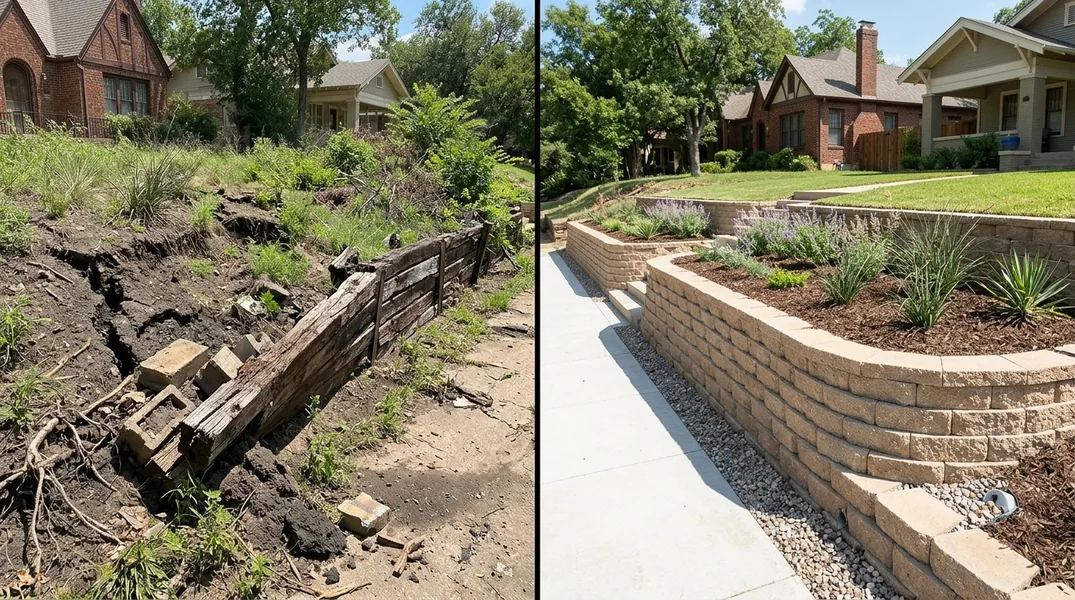
Understanding Hydrostatic Pressure and Retaining Wall Failure
Every spring, Fort Worth homeowners face a common but serious problem: retaining walls that fail under the pressure of water buildup. The culprit behind most of these failures is something called hydrostatic pressure, a force that builds up when water becomes trapped behind your retaining wall and has nowhere to go.
When soil becomes saturated from heavy spring rains, the water doesn't simply drain away on its own. Instead, it exerts tremendous force against the back of your wall, pushing outward with increasing intensity. This hydrostatic pressure on retaining walls is one of the leading causes of structural damage, bulging, cracking, and complete wall failure. The pressure increases with depth, meaning the lower portions of your wall bear the heaviest load. Over time, this relentless force can cause even well-built walls to fail, leading to costly repairs or total replacement.
The problem is especially acute in Fort Worth during spring storm season, when rainfall can be intense and unpredictable. A single heavy downpour can saturate the soil behind your wall, and if proper drainage systems aren't in place, the damage can begin immediately. Many homeowners don't realize their walls are in danger until they notice visible signs of failure like tilting, bulging, or horizontal cracking along the wall face.
How Spring Storms Accelerate Retaining Wall Damage
Spring in Texas brings dramatic weather changes, and Fort Worth is no exception. The region experiences unpredictable storms that can drop several inches of rain in a matter of hours. When these storms occur, water doesn't just fall on your property and disappear. Much of it infiltrates the soil behind your retaining wall, and if your wall lacks proper drainage infrastructure, that water has no escape route.
The combination of heavy rainfall and poor soil drainage creates a perfect storm for retaining wall failure. Water accumulates behind the wall, increasing in volume and pressure with each passing hour. The soil becomes heavier as it absorbs moisture, adding weight to the already considerable hydrostatic pressure. This dual force of water pressure and increased soil weight can overwhelm even substantial walls. Additionally, spring storms often soften the soil, reducing its ability to support the wall structure. Homeowners who've invested in Retaining Wall Installation without adequate drainage systems frequently discover their walls failing within just a few years of spring storm exposure.
The damage from spring storms isn't always immediately visible. Often, internal stress fractures develop first, weakening the wall's structural integrity long before obvious signs appear on the surface. By the time homeowners notice a problem, significant damage may have already occurred, making Retaining Wall Repair more expensive and complicated than preventive drainage installation would have been.
The Critical Role of Retaining Wall Drainage Systems
Proper drainage is not an optional add-on to retaining wall construction. It's an essential component that determines whether your wall will last decades or fail within years. A well-designed retaining wall drainage system intercepts water before it accumulates behind the wall, directing it safely away from the structure and into proper drainage channels. Without this system, water inevitably builds up, creating the hydrostatic pressure that destroys walls.
There are several types of drainage solutions available for retaining walls, each suited to different soil conditions and wall configurations. The most common and effective approach involves installing a perforated drainage pipe, often called a French drain system, along the base of the wall. This pipe collects water that filters through the soil and channels it away from the wall foundation. Additionally, a layer of gravel or drainage rock behind the wall helps water move downward and away from the wall face rather than pooling against it. Many modern Concrete Retaining Walls also incorporate weep holes, small openings that allow water to escape through the wall face itself, further reducing hydrostatic pressure.
The effectiveness of your retaining wall drainage depends on proper installation and material selection. A retaining wall French drain must be installed at the correct slope to ensure gravity moves water away from the wall. The drainage pipe must be properly perforated and wrapped with filter fabric to prevent soil from clogging the system. These details matter enormously, which is why working with experienced professionals is crucial for long-term wall performance.
Retaining Wall Drainage Solutions: French Drain Installation
A retaining wall French drain is one of the most effective solutions for managing water behind retaining walls. This system consists of a perforated pipe installed along the base of the wall, typically surrounded by gravel and filter fabric. Water percolates through the soil, enters the perforated pipe, and is directed away from the wall to a safe discharge point. When installed correctly, a French drain can virtually eliminate hydrostatic pressure problems.
The installation process for a French drain requires careful planning and execution. The pipe must be laid at a slight downward slope, typically one percent grade or more, to ensure water flows continuously away from the wall rather than pooling in low spots. The pipe is surrounded by coarse gravel, which allows water to flow freely while preventing fine soil particles from entering the drainage system. A layer of filter fabric separates the gravel from the surrounding soil, further protecting the system from clogging. The entire assembly is then covered with additional soil and landscaping material.
For homeowners in Fort Worth concerned about existing wall damage or planning new construction, understanding French drain installation is essential. This investment in proper drainage can extend your wall's lifespan by decades and prevent costly repairs. If you're unsure whether your current retaining wall has adequate drainage, or if you're planning new Retaining Wall Installation, professional assessment is worthwhile. Contact Fort Worth Retaining Wall at (817) 764-1304 to discuss your drainage needs and get a free estimate for your project.
Signs Your Retaining Wall Has Drainage Problems
Recognizing the early warning signs of drainage failure can save you thousands of dollars in repairs. One of the most obvious indicators is visible water seeping or pooling behind your wall after rain. If you notice water running down the wall face or accumulating in puddles at the wall's base, your drainage system isn't functioning properly. Additionally, watch for soil erosion around the wall's base or vegetation dying in areas that should be well-drained, as these can indicate water saturation problems.
Structural signs of drainage problems are even more concerning. Horizontal cracks in the wall, particularly near the base, often indicate hydrostatic pressure buildup. Bulging or bowing of the wall face means the wall is being pushed outward by water pressure and soil weight. Tilting or leaning walls suggest foundation settlement caused by water infiltration and soil instability. Efflorescence, a white powdery substance on the wall surface, indicates water is moving through the wall and depositing mineral salts. Any of these signs warrant immediate professional inspection, as continued water damage will only worsen and lead to eventual Retaining Wall Replacement.
If you've noticed any of these warning signs on your property, don't wait for spring storms to cause catastrophic failure. The sooner you address drainage issues, the better your chances of saving your wall through repair rather than replacement. Professional contractors can assess your situation and recommend appropriate solutions, whether that's installing a new French drain system, improving existing drainage, or addressing structural damage.
Preventing Future Damage: Maintenance and Professional Assessment
The best approach to retaining wall longevity is prevention through proper maintenance and professional oversight. After spring storms, take time to inspect your wall for any signs of water damage or structural stress. Clear debris from around the wall base and ensure that surface water from your roof gutters and downspouts is directed away from the wall, not toward it. Vegetation should be managed carefully, as large tree roots can damage walls and compromise drainage systems, while also trapping moisture against the wall surface.
Regular professional inspections can catch problems before they become serious. A qualified contractor can evaluate your wall's drainage system, identify weak points, and recommend improvements before spring storm season arrives. If your wall was installed without proper drainage, retrofitting a French drain system or improving existing drainage is a smart investment that will pay dividends through extended wall life and reduced repair costs. Whether you need assessment, maintenance, or new installation, experienced professionals understand the specific challenges that Fort Worth's climate and soil conditions present.
Don't let spring storms destroy your retaining wall. If you're concerned about your wall's drainage or structural integrity, reach out to Fort Worth Retaining Wall today. Our team has extensive experience addressing hydrostatic pressure problems and installing effective drainage solutions. Call us at (817) 764-1304 or visit our website to request a free estimate. We'll assess your wall's condition, explain your options, and help you protect this important investment in your property's landscape and structure.
Looking for a professional retaining wall contractor in Fort Worth? Fort Worth Retaining Wall responds fast for all your retaining wall needs.
Get a Free QuoteOur services: Retaining Wall Installation · Retaining Wall Repair · Retaining Wall Replacement